






























































































































At the First International Zika Conference, keynote speaker Annelies Wilder-Smith, MD, PhD, DTM&H, MIH, FAMS, FACTM, discussed how Zika has evolved on a global scale.
At the First International Zika Conference, keynote speaker Annelies Wilder-Smith, MD, PhD, DTM&H, MIH, FAMS, FACTM, discussed how Zika has evolved on a global scale.

Marta G. Cavalcanti, MD, PhD, physician at Infectious Diseases Clinic, Hospital Universitario Clementino Fraga Filho, UFRJ, Brazil, discusses how the period of RNA shedding correlates with the severity of complications associated with mono- or coinfection in Zika patients.

In the first study to examine multiple body fluids for the presence of Zika virus in an ongoing fashion, researchers discover Zika virus remains in bodily fluids longer than other flaviviruses.

Researchers from sub-Saharan Africa provide evidence that oral ciprofloxacin is efficacious for treatment of plague.
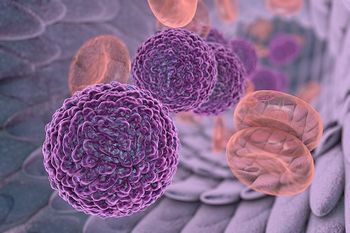
A new study coming in from the CDC shows that German travelers are bringing home a diverse array of dengue virus strains.
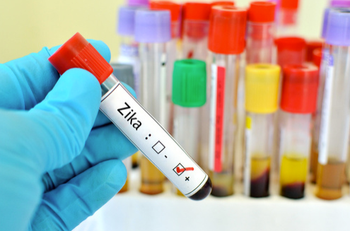
Results from Zika virus testing conducted by the District of Columbia Department of Forensic Sciences Public Health Laboratory between July 14, 2016 and December 14, 2016 raised red flags when all results came back negative.

A recent outbreak of leptospirosis in the Bronx section of New York City has local officials on alert.

Researchers have found that the Zika virus uses receptor tyrosine kinase AXL to slip past major barrier cell types in the placenta.

Researchers from Emory Vaccine Center study human dendritic cells infected with contemporary and historical strains of the Zika virus.

Researchers are expressing concern that funding for research climate-monitoring programs may not come through and that this would negatively impact the study of some infectious diseases.
Contagion® is celebrating it’s one-year anniversary today, February 7, 2017. As we hit this milestone, we wanted to look back and remember the three articles that launched Contagion® on this day in 2016.
The Centers for Disease Control and Prevention (CDC) has issued an elevated risk travel alert for the country of Brazil as they are currently experiencing an outbreak of yellow fever.

The Texas Department of State Health Services recently reported the first laboratory-confirmed case of Zika virus in pregnant woman who did not travel outside of the state.

In Illinois and Wisconsin, eight individuals working at rat-breeding facilities have contracted Seoul virus.
Researchers from La Jolla Institute for Allergy and Immunology believe that their findings will provide a platform to understand how Zika virus makes its way into various body fluids.

A team of researchers has found that urbanized white ibises may be shedding Salmonella enterica and transmitting it to humans visiting parks.
As concerns over the spread of tropical infectious diseases increase, in the age of Zika virus and Dengue fever in particular, PRVs may have significant implications for the development of novel vaccines and antivirals, assuming the program is used effectively.
The researchers evaluated populations of Aedes aegypti, Aedes albopictus, and Culex quinquefasciatus collected both in the field and raised in a lab setting to determine whether or not the mosquitoes required bacterial populations in their guts to develop, and which bacteria were necessary to the process.

The World Health Organization issues a yellow fever outbreak warning in Brazil, a country that is already dealing with outbreaks of Zika virus, chikyngunya, and dengue.

Researchers from Germany recently published a new study that can change how future scientists study the replication of the Dengue and Zika viruses within the human body.
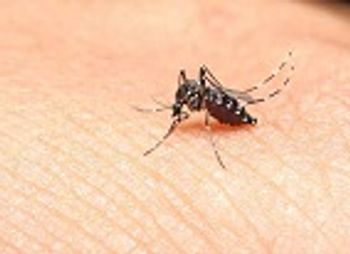
Researchers have found that it is possible to bolster the immunity of the Aedes aegypti mosquito, the species that transmits Dengue, Zika, and Chikungunya, against these viruses and effectively suppress its ability to transmit the disease.

A team of dermatologists and gynecologists recently described their work with a 23-year-old pregnant woman in Florida who was eventually confirmed as the first documented case of Zika virus infection acquired via a mosquito bite sustained in the local area.

Researchers from Martinique, France have determined that current tools to diagnose Chikungunya infection in older adults may not be useful.

A research team examines two Yosemite plague diagnoses to determine effectiveness of procedures for the detection, protection, and prevention of Yersinia pestis.

Holly Frost, MD, pediatrics physician scientist at the Marshfield Clinic Research Foundation, in Minocqua, Wisconsin, discusses whether or not the prevalence of Powassan virus is increasing in humans.