
































































































































On Thursday, June 23, 2016, House Republicans approved a bill which included a $1.1 billion fund to combat Zika. But, there’s one big drawback, according to Democrats.
On Thursday, June 23, 2016, House Republicans approved a bill which included a $1.1 billion fund to combat Zika. But, there’s one big drawback, according to Democrats.

A new case report about the death of a woman from rabies emphasizes the importance of rabies awareness and education among the public.

Justin R. Anderson, PhD, associate professor of biology at Radford University, describes his research on the effects of endocrine disrupting chemicals on mosquito-borne viruses.

On June 17, the CDC announced that 1% of all blood donations analyzed in the American territory had tested positive for Zika, and that this could be an indication that the outbreak is poised to reach dangerous proportions.
Administration of cholesterol-lowering statins to mice reduced the number of Borrelia burgdorferi bacteria in the rodents and helped to prevent the spread of Lyme disease, a new study has suggested.

A new study has suggested that Yersinia pestis—the causative agent of plague—likely entered Europe only once, and later spread to China where it has become the source of modern plague outbreaks.

With vaccine supplies at alarmingly low levels a potential public health emergency of global proportions may be on the horizon.
In a webinar presented on June 9 by The Department of Health and Human Services (HHS) Working Group on Lyme and Other Tick-borne Diseases, a panel of speakers discussed trends in tick-borne diseases (TBDs) in the United States.
A long-held belief regarding the way in which vaccinations work to protect hosts from pathogens may be inaccurate.
In an effort to contain the Zika virus, the Centers for Disease Control and Prevention (CDC) is holding a series of teleconferences regarding concerns that were raised during the Zap Zika conference held in early April. The fifth conference in the series discusses Zika epidemiology.
Recent studies on Zika have lead researchers to discover how the virus causes neurological complications, as well as ways in which the body can fight off the infection.
In an open letter copied to the International Olympic Committee, 150 health experts from around the world urged the WHO Director-General, Margaret Chan, MD, MPH, to either postpone or move both the Olympic and Paralympic Games, for the sake of public health.

Efforts to bring to market a vaccine for the fight against Zika virus, at least via the private sector, have been stalled over concerns regarding the “marketability” of these products, according to multiple reports in the business press.

Management of visceral leishmaniasis poses a daunting challenge, in part due to the side effects associated with the use of the traditional treatment. However, one vaccine development strategy has recently shown promising results.

For the first time, a recent study has captured African monkeys eating bats—a finding that raises concern about the spread of zoonotic diseases such as Ebola.

In an attempt to provide the best possible care for her unborn child, a Honduras woman with suspected Zika infection traveled to the United States where she then gave birth to a baby with microcephaly at Hackensack University Medical Center.

On May 31, 2016, the Centers for Disease Control and Prevention (CDC) updated its interim guidance on screening for, and diagnosis of, Zika virus.

Researchers have identified the first-ever reported cases of yellow fever in China, tracing their origins to travelers from Angola, where there is an ongoing outbreak.
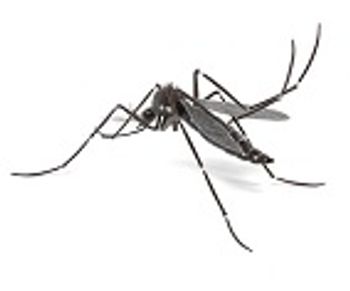
Makers of specially modified mosquitoes designed to combat the Zika virus have approached regulatory bodies in multiple countries seeking approval to use their products in the fight against the mosquito-borne virus.

Christina G. Tan, MD, MPH, FACP, New Jersey State Epidemiologist/Assistant Commissioner, provides background on New Jersey Department of Health’s Zika prevention program, ZAP Zika.
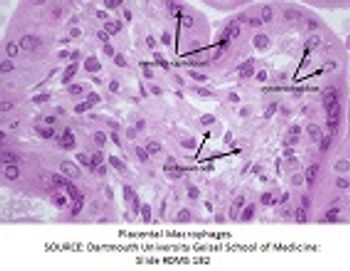
Zika virus is transmitted from mother to fetus through placental macrophages, according to a new study.
The Zika virus has left many scientists and doctors “astonished,” according to Margaret Chan, MD, MPH, director-general of WHO.
Researchers have identified US Food and Drug Administration (FDA)-approved drugs that could help in the fight against post-treatment Lyme disease syndrome (PTLDS).

Christina G. Tan, MD, MPH, FACP, New Jersey State Epidemiologist/Assistant Commissioner, examines the probability of a Zika outbreak in New Jersey.
In an address to the 69th annual World Health Assembly, Margaret Chan, MD, MPH, director-general of the World Health Organization (WHO), discussed the impending threat of yellow fever.