























































































































Investigators examined data from the Global Burden of Disease, Injuries, and Risk Factors study 2019 to describe the global, regional, and national burden of liver cancer due to hepatitis C since 1990.
Investigators examined data from the Global Burden of Disease, Injuries, and Risk Factors study 2019 to describe the global, regional, and national burden of liver cancer due to hepatitis C since 1990.

Statistically significant reductions in serum ferritin, transferrin saturation index, and iron levels were observed after treatment, with hyperferritinemia eradicated in nearly all patients treated with DAAs achieving SVR.

The week's news included the differences in public attitudes towards influenza and COVID-19 vaccines, sex-based differences in direct-acting antivirals, a request for an emergency use authorization for a monoclonal antibody for COVID-19 prevention in the immunocompromised, and our final episode of our RSV Roundtable series, which has clinicians weighing in on the importance of counseling patients on the immunizations now and their significance for the future.

New and novel antimicrobials remain at a crossroads as the path to development and economic viability continue to be serious challenges. Our Editor-in-Chief weighs in on this topic and some of the other most significant ones from this past year.

Although no differences were observed in the safety and efficacy of FDA-approved combination DAA therapies, female participants reported numerically more adverse events than male participants.

A study utilizing this technology identified specific predictive factors for developing hepatitis in diabetic patients.
In 2023, there were numerous developments in hepatitis C including the Biden Administration's new budget that put aside several billion dollars towards establishing a hepatitis C (HCV) program; the Cherokee Nation's Hepatitis C elimination program which has worked to increase screening and get people into the continuum of care; and how one clinician is bringing HCV care to the streets through her mobile clinics. Check out these stories and more from this year.
The first self-amplifying mRNA COVID-19 vaccine was approved in Japan; how email reminders fared in encouraging people with diabetes to get their influenza vaccines; in the latest RSV Roundtable, our panel discusses the addition of nirsevimab; and a biotech company is focused on the detection and diagnosis of viral diseases, with a particular interest in Long COVID.
The implementation of clinical and specialty pharmacy services significantly increased the rate of patients transitioning from tenofovir disoproxil fumarate to tenofovir alafenamide.

A clinician utilizes mobile clinics to bring a hybrid of primary and urgent care to marginalized populations and help people overcome barriers and gets them into the continuum of care.

Just 8.5% of eligible patients were screened for hepatitis C, and among them, 5.9% tested positive for HCV antibody and 3.0% had an active infection.

Infants with HIV could be spared from requiring lifetime ART if treated within hours of birth to disrupt formation of HIV viral reservoirs.

High cure rates underscore the effectiveness of the No One Waits (NOW) model in ensuring not only treatment initiation but also successful completion, ultimately reducing the burden of HCV in the studied population and possibly beyond.

Therapy development, management improvements, and public health initiatives have all helped to change the trajectory of health outcomes for many, but still millions of people remain behind and are not in the continuum of care.

Salem Hospital faces a class action lawsuit over potential hepatitis and HIV exposure to hundreds of patients. The lawsuit alleges negligence and emotional distress, with the hospital claiming a minimal infection risk.

Treatment with glecaprevir/pibrentasvir (G/P) demonstrated a virologic response at post-treatment week 12, which was superior to the prior efficacy threshold.
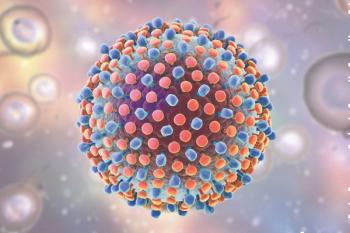
Biopharmaceutical company, Barinthus Biotherapeutics, studied its investigational immunization candidate, VTP-300, together with Arbutus Biopharma’s hepatitis B (HBV) therapeutic, imdusiran.
In this week's news, we covered the HCV elimination program, recent food recalls, live biotherapeutic products for recurrent C diff, and the availability of a monoclonal antibody for RSV prevention in infants.
Hepatitis B virus vaccination shown to to significantly improve survival rates for patients with chronic hepatitis C, nonalcoholic liver disease, and liver cirrhosis.

Tatyana Kushner, MD, MSCE, offers her insights on the Biden administration's hepatitis C elimination plan.

Madhumita Premkumar, MD, discusses a nationwide, cost-efficient eradication strategy she believes could benefit Americans' efforts to curb HCV.
At the American Association for the Study of Liver Diseases (AASLD) meeting held last week, Barinthus Biotherapeutics announced the presentation of data from its hepatitis B clinical trials.

The panelists discuss the importance of the role of task shifting in Hepatitis C care.

Experts discuss where we currently stand on the World Health Organization elimination goals for Hepatitis C virus.
CDC recommends HCV testing in these populations as a critical step to achieving national priority of eliminating HCV.