

Antibiotics
Latest News
Advertisement
Latest Videos








































































































































Advertisement
More News

Surotomycin fails to show benefit over vancomycin for the treatment of Clostridium difficile infection in a phase 3 trial.
Contagion® will be providing exclusive coverage on the conference, and so, keep your eyes peeled for session coverage and interviews with some of the key presenters.
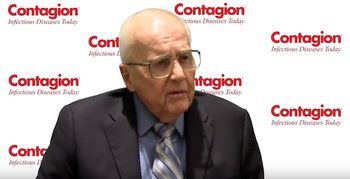
William D. O’Riordan, MD, FACEP, explains what makes iclaprim a unique antibiotic.
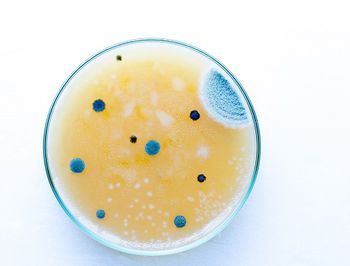
One single-center study demonstrates that for patients with hospital stays of 1 week or less, reporting bacteriology results sooner may lead to earlier discharge.
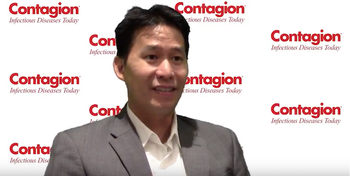
David Huang, PhD, MD, explains what the next steps are for iclaprim, an antibiotic developed to treat patients with acute bacterial skin and skin structure infections.

UCLA researchers have shown that using molecular methods to predict susceptibility testing could serve as a new way to monitor drug-resistant gonorrhea.
Alan Gross, PharmD, shares the drawbacks of some of the current prediction tools used for pneumonia.

WHO report confirms that “the world is running out of antibiotics” to treat resistant priority pathogens

As practitioners continue to mistake the worsening of asthma symptoms for bacterial respiratory infections, more antibiotics are being prescribed, many times, inappropriately.
Daniel Pilch, PhD, explains how the health care system must change in order to battle antibiotic resistance.

Antimicrobial stewardship and antimicrobial susceptibility testing (AST) remain critical in the race against antimicrobial resistance.
Alan Gross, PharmD, shares how an early diagnosis of multidrug-resistant pneumonia can work towards improving patient outcomes.
Meghan Jeffres, PharmD, shares what should be considered when considering the incorporation of penicillin skin testing into a health care facility.

Diagnostic methods make all the difference in efforts against antimicrobial resistance.

Edmond LaVoie, PhD, shares different approaches that can be used to forestall the development of antibiotic resistance.
Alan Gross, PharmD, BCPS-AQID, shares how the Society of Infectious Diseases Pharmacists is working to improve antibiotic stewardship programs in long-term care facilities.
To paraphrase Anthelme Brillat-Savarin, “we are what we eat”—Especially when it comes to antimicrobials and food-producing animals.
Jason Pogue, PharmD, BCPS-ID, explains the clinical significance of his research team’s findings regarding the use of ceftolozane-tazobactam to treat Pseudomonas infections.

Edmond LaVoie, PhD, explains how his team’s approach can be applied in the development of novel drugs for the treatment of drug-resistant infections caused by Gram-negative and Gram-positive bacteria.

A team of researchers discover that Klebsiella pneumoniae is not the only culprit behind life-threatening healthcare-associated infections: there are two other Klebsiella species that share the blame.
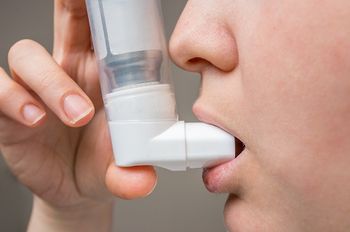
Lucy B. Palmer, MD, from Stony Brook University School of Medicine in New York argues that inhaled antibiotic therapy provides higher drug concentrations of antibiotics with fewer systemic side effects than IV therapy.

The results of a new study from Vanderbilt University provide more support for breastfeeding, revealing that sugars in human breast milk can help protect babies from bacterial infections.
Daniel Pilch, PhD, discusses the approach that he and his team took to develop a new drug to fight MRSA.

A herpes infection leads to deadly viral meningitis in an Iowa infant, an ingestible smart pill that can remind you to take your medications, global catastrophic biological risks, whether or not you should complete the full course of antibiotics, and all you need to know about Candida auris make up this week’s Top 5 articles.
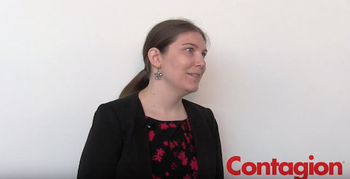
Milena McLaughlin, PharmD, MSc, explains how antimicrobial shortages differ between high- and low-income countries.
Advertisement
Advertisement
Trending on Contagion Live
1
Invivyd doses first participants in phase 3 COVID-19 trial of VYD2311
2
ASM Initiative Aims to Advance Phage Therapy for Drug-Resistant Infections
3
The HIV Testing Gap and What Clinicians Can Do About It
4
When Fever in Infants is Invasive Bacterial Infection
5